
Concrete terms, explained
Learn the jargon of concrete work.
A
Aggregate
Inert granular materials such as sand, gravel, or crushed stone, used in concrete to increase its volume.
C
Control Joint
Planned cracks that allow for expansion and contraction, reducing the risk of random cracking.
Cracking
Lines that appear on the concrete surface, which can vary in size and may indicate structural issues.
Curing
The process of maintaining adequate moisture, temperature, and time to allow concrete to achieve its desired properties.
D
Discoloration
Changes in color on a concrete surface, which can result from water exposure, weathering, or chemical reactions.
E
Efflorescence
A powdery white deposit on concrete surfaces caused by water-soluble salts migrating to the surface.
Expansion Joint
Designed gaps between concrete slabs that allow for movement due to temperature changes, reducing stress.
F
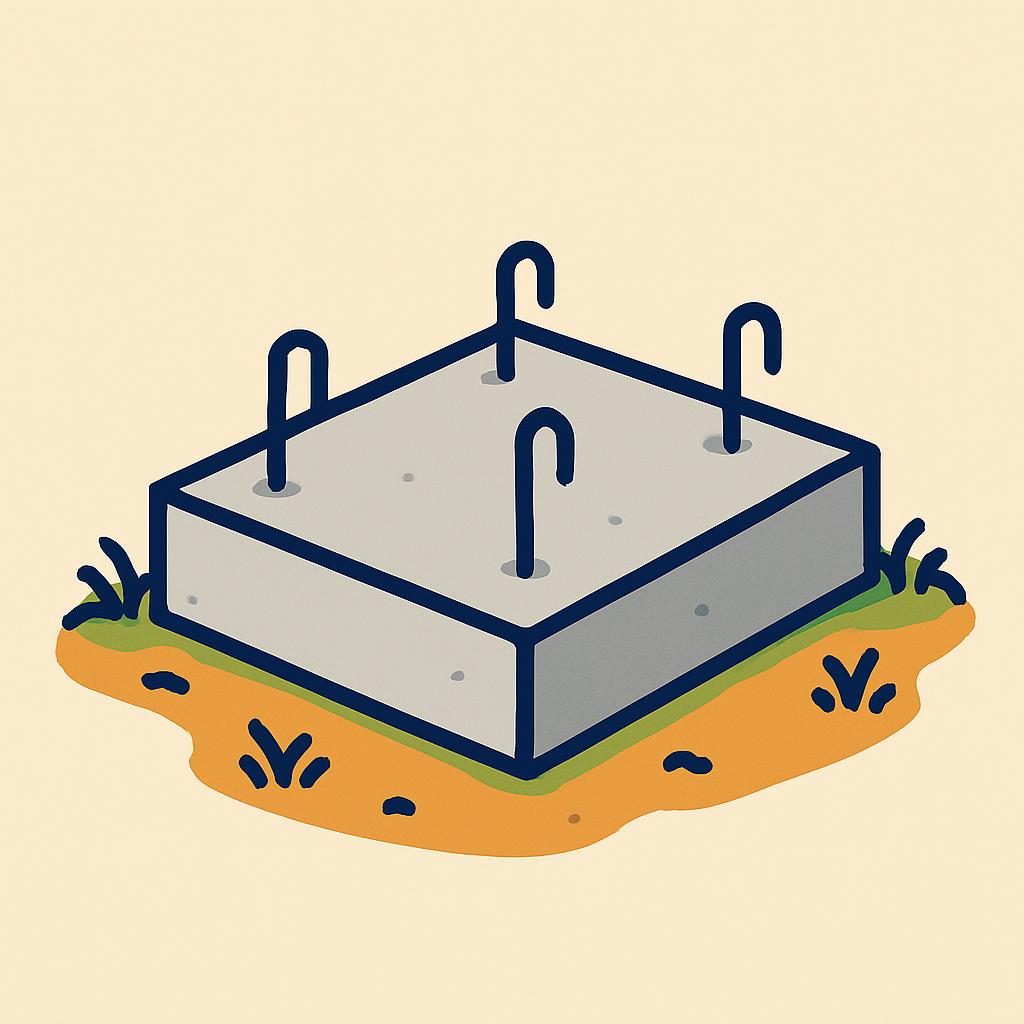
Foundation
The lowest load-bearing part of a building, typically made from poured concrete to provide stability.
H
Hydration
The chemical reaction between cement and water, which is crucial for concrete to gain strength.
P
Polished Concrete
A high-gloss finish for concrete achieved through mechanical grinding and polishing.
R
Rebar
Steel bars embedded in concrete to reinforce it, providing increased strength and flexibility.
Retaining Wall
A structure used to hold back soil or water, often built using concrete for strength and durability.
S
Slab
A flat, horizontal surface of concrete that is typically used for floors, patios, and sidewalks.
Spalling
Flaking or chipping off of the concrete surface, often due to freeze-thaw cycles or improper finishing.
Stamped Concrete
A decorative concrete variant where the surface is patterned, textured, or embossed to resemble other materials.
Subgrade
The layer of soil that supports a concrete slab, preparation of which is crucial for stability.
Got a concrete question?
Tell us the town and what you are seeing. We call back to set a time.